

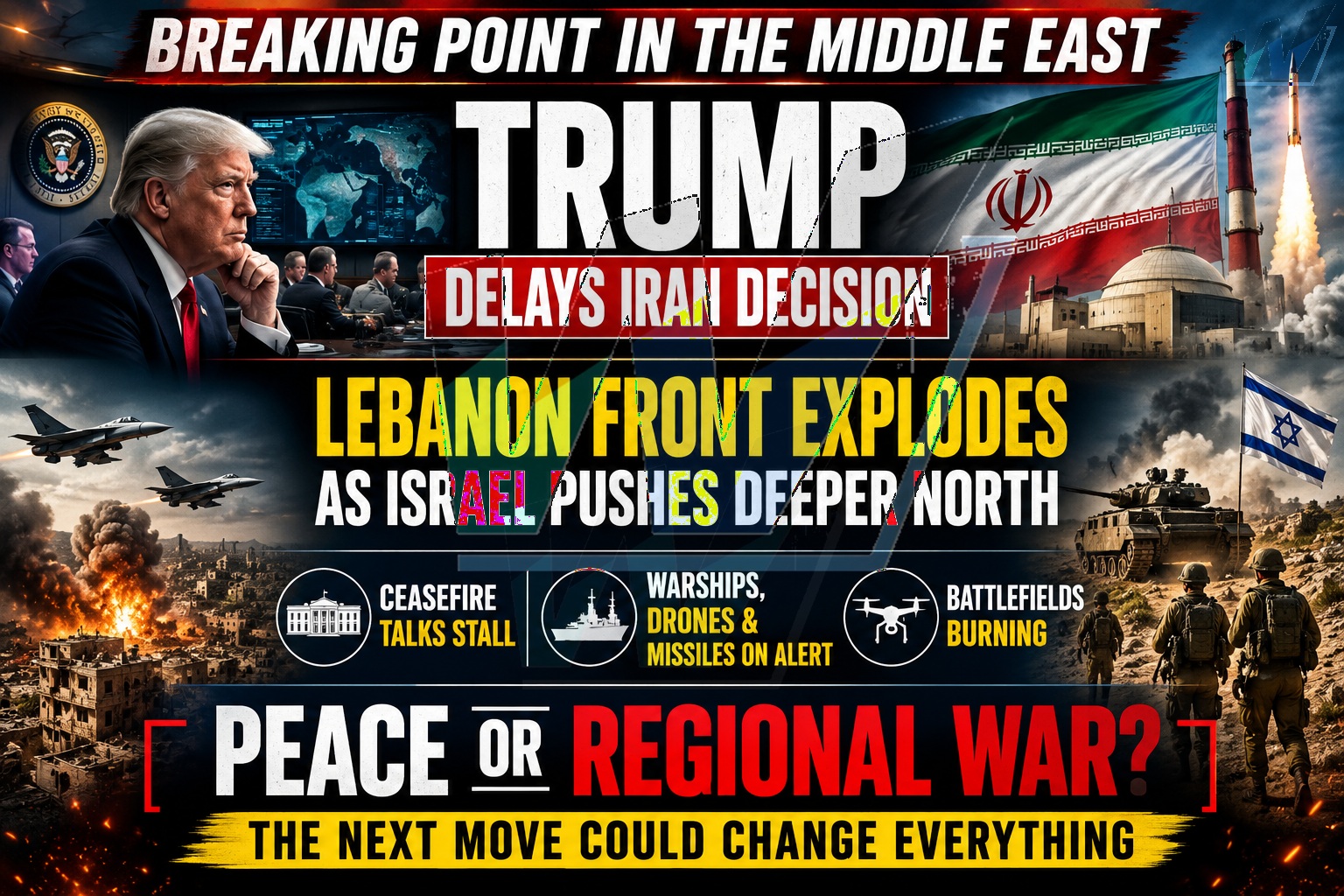
The Middle East is once again balancing on the edge of a knife.
Inside the heavily secured Situation Room at the White House, US President Donald Trump spent more than two tense hours with his top advisers on Friday, reviewing what could become one of the most consequential diplomatic agreements of the year. Outside those walls, however, missiles, drones, warships, and advancing armies continued to shape a region racing toward either fragile peace or a wider war.
The expectation was clear: Trump would emerge with a final decision on a proposed agreement aimed at ending the devastating US-Israeli confrontation with Iran.
Instead, silence followed.
No announcement. No breakthrough. No deal.
Only deeper uncertainty.
The Deal That Could Change Everything — Or Collapse Overnight
Hours before entering the Situation Room, Trump signaled that a historic decision was imminent. In a lengthy social media statement, he outlined conditions that Washington reportedly wants Tehran to accept permanent guarantees against developing nuclear weapons, unrestricted navigation through the strategic Strait of Hormuz, and measures involving Iran’s enriched uranium stockpiles.
For Washington, the proposal could offer a way out of a conflict that has rattled energy markets, sent oil prices soaring, and raised fears of a broader regional war.
For Tehran, the terms remain deeply contentious.
Iranian officials quickly pushed back. Foreign Ministry spokesman Esmaeil Baghaei dismissed suggestions that Iran was negotiating away its nuclear future, insisting that no final agreement had been reached and describing several reported provisions as inaccurate.
Iranian sources went further, reportedly labeling portions of Trump’s characterization as a “mixture of truth and lies.”
Among the most disputed issues is the fate of billions of dollars in frozen Iranian assets. Tehran is said to be demanding immediate financial relief before moving forward, while also rejecting claims that it has agreed to destroy enriched uranium stockpiles.
The result is a dangerous diplomatic stalemate.
Messages continue to move between Washington and Tehran, but the path forward remains obscured by mistrust, competing demands, and the lingering threat of renewed military confrontation.
Hormuz: The Chokepoint Holding the World’s Breath
At the center of the negotiations lies the narrow but enormously powerful Strait of Hormuz.
The waterway remains one of the world’s most critical energy arteries, through which a significant portion of global oil and gas shipments passes. Any disruption there reverberates across international markets within hours.
Trump suggested that a successful agreement could reopen maritime traffic and lead to the lifting of naval restrictions that have trapped vessels in the region.
Yet Iranian officials insist key details remain unresolved.
Meanwhile, state media in Tehran reported that dozens of ships have continued transiting the strait under military supervision. At the same time, Iran warned that vessels from hostile nations could face a “severe response” if tensions escalate.
The message was unmistakable: diplomacy is alive, but the guns remain loaded.
Lebanon Ignites as Diplomacy Struggles to Keep Pace
While negotiators wrestled with Iran’s future, another front of the conflict was intensifying hundreds of miles away.
Southern Lebanon erupted once again as Israeli forces expanded operations deeper into Lebanese territory, marking one of the most dramatic escalations since fighting resumed earlier this year.
Israeli Prime Minister Benjamin Netanyahu announced that troops had crossed the Litani River, a symbolic and strategic boundary that has long served as a centerpiece in ceasefire arrangements between Israel and Hezbollah.
The crossing sent a clear signal.
Israel is no longer content with defensive positions near the border. It is pushing further north.
Israeli aircraft continued pounding targets across southern Lebanon, while evacuation warnings spread through towns and villages already scarred by months of violence.
At the same time, Hezbollah answered with its own show of force.
The Iranian-backed movement launched waves of drone attacks against Israeli military positions, targeting troop concentrations and military facilities in northern Israel. The strikes underscored a reality that neither side appears willing to acknowledge publicly: despite ceasefire declarations, the war never truly stopped.
Washington Talks, Battlefield Reality
As explosions echoed across Lebanon, military delegations from Israel and Lebanon met in Washington under American sponsorship.
The objective was ambitious: to prevent the conflict from spiraling into an even larger regional catastrophe.
One issue dominated the agenda — Hezbollah’s disarmament.
For Israel, dismantling Hezbollah’s military capabilities remains a central demand. For Lebanon, securing a durable ceasefire is viewed as the essential first step before any broader political or security arrangements can be considered.
Yet every new strike, every drone attack, and every military advance make those discussions more difficult.
One Conflict, Multiple Fronts
The battlefields of Lebanon and the negotiations with Iran are no longer separate stories.
They are becoming parts of the same geopolitical struggle.
Iran has reportedly linked any broader agreement to a reduction in pressure on its regional allies, including Hezbollah. Israel, meanwhile, continues intensifying operations against the group, arguing that military pressure is necessary to restore security along its northern border.
That leaves Washington attempting to solve two crises simultaneously: securing an agreement with Tehran while preventing Lebanon from becoming the spark that reignites a larger regional war.
The Next Move
As night fell over Washington, the world was left waiting.
Trump had entered the Situation Room prepared to decide the fate of a potential deal. He emerged without signing off on it.
In the Strait of Hormuz, warships remain on alert.
In southern Lebanon, artillery and drones continue their deadly exchange.
And across the Middle East, governments, markets, and military are watching for the next move.
Because whether the region moves toward peace or plunges deeper into conflict may now depend on decisions still being debated behind closed doors.