
Hackers Turn Supermarket Freezers into Ovens: EU Scrambles to Stop New Attacks
From France to Germany: The Cyberattack Threatening Europe’s Food Security
Germany, Romania and Britain report new incidents as Brussels coordinates an emergency response. From Belgium to Sweden, hackers have manipulated refrigeration systems, destroyed food stocks and exposed a dangerous weakness in Europe’s critical infrastructure.
Europe’s supermarkets are facing an unusual but increasingly dangerous enemy: hackers who can turn refrigerators and freezers into instruments of disruption.
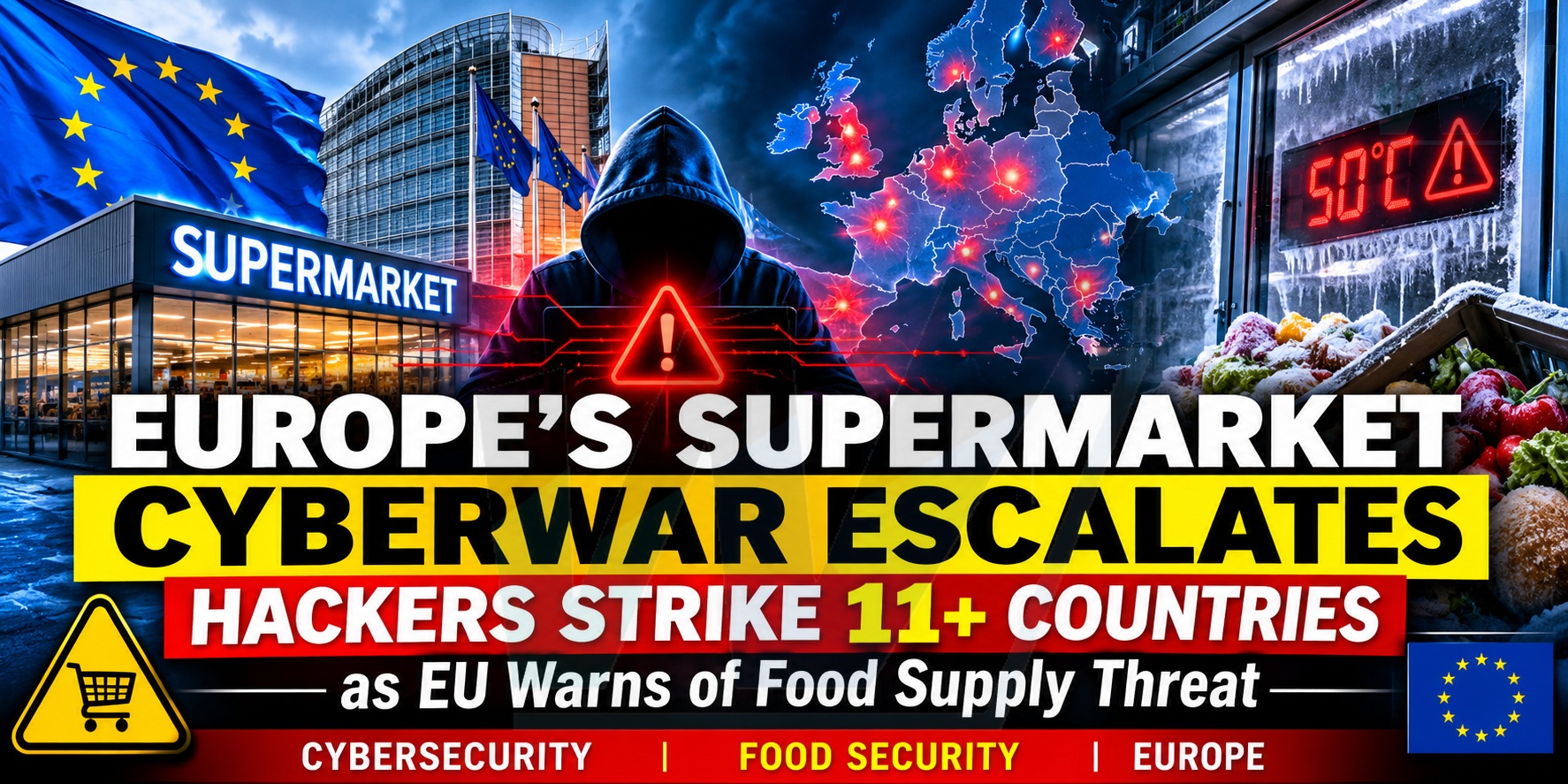
What began as a series of mysterious refrigeration failures has developed into a cross-border cybersecurity crisis. Following attacks reported across several European countries on November 2, Germany, Romania and the United Kingdom confirmed additional incidents, bringing the number of affected European countries to at least 11.
The attackers reportedly manipulated remotely controlled refrigeration systems, raising temperatures, activating defrost cycles and forcing supermarkets to discard large quantities of fresh and frozen food.
With no group claiming responsibility and the motive still unknown, the European Union is warning that the incidents are not isolated and demanding stronger collective defenses.
Germany, Romania and Britain join the growing list
Germany reported four affected supermarkets in North Rhine-Westphalia and Bavaria. According to public broadcaster ARD, two CAP stores, one Rewe outlet and an Edeka supermarket experienced refrigeration failures after their systems were remotely switched from cooling to heating.
In one particularly alarming case, equipment was reportedly set to heat to approximately 50°C. Large quantities of merchandise had to be discarded, while police in Bavaria opened an investigation into suspected cybercrime.
Romania confirmed incidents involving six supermarket outlets. However, the country’s cybersecurity chief, Dan Cimpean, played down the possibility of state-sponsored involvement.
Describing the operation as seemingly semi-amateurish, he said investigators did not suspect a state actor and reported no compromise of other infrastructure.
Britain also detected limited incidents affecting small meat-processing businesses. National Cyber Security Centre chief Richard Horne warned that vulnerable technology had been exploited, highlighting the wider implications for the food supply chain.
Belgium, Sweden and Italy count the losses
Belgium emerged as one of the hardest-hit countries, with several supermarket chains reporting refrigeration failures.
Carrefour confirmed problems in approximately 15 of its 700 Belgian stores, while Delhaize, Colruyt and Intermarché also reported incidents. Federal prosecutors opened an investigation.
In Sweden, Coop reported that seven stores had experienced problems involving refrigeration equipment connected to older 4G networks. The company accelerated its transition to newer technology and confirmed that normal operations had resumed.
Italy reported approximately 20 affected supermarkets. Four Coop outlets in Sicily suffered significant food losses, with thousands of euros in estimated damage.
Prime Minister Giorgia Meloni’s government convened consultations involving intelligence officials and the National Cybersecurity Agency.
Meanwhile, Ireland, Finland, Estonia, Luxembourg, the Netherlands and Portugal also reported incidents affecting supermarket refrigeration systems or related businesses.
The precise number of affected outlets and countries varies between reports as investigations continue and retailers distinguish confirmed cyberattacks from unexplained technical failures.
How hackers turned supermarket freezers into weapons
This method is particularly disturbing because it does not necessarily require attackers to penetrate a supermarket’s main computer network.
Modern supermarkets increasingly rely on connected refrigeration controllers that allow technicians to monitor temperatures, manage equipment and perform maintenance remotely.
These systems can become entry points when they are outdated, poorly protected or directly accessible through the public internet.
By exploiting vulnerable controllers or compromised access credentials, attackers can manipulate refrigeration settings, activate defrost cycles and delay alarms.
The October attacks in France exposed the danger.
During October 11–12, hundreds of supermarkets and independent stores experienced refrigeration failures. Some temperatures reportedly climbed to 50°C, while one incident reached 80°C.
The attacks affected businesses operating under major retail brands, including Carrefour, Intermarché, E.Leclerc, Monoprix, Netto and Coopérative U.
Investigators identified vulnerable refrigeration-management equipment associated with manufacturers including Denmark’s Danfoss and US-based Copeland.
France’s national cybersecurity agency subsequently issued technical warnings identifying affected equipment families and recommending immediate security measures.
The November incidents have renewed concerns that vulnerable systems remain exposed across Europe.
The American connection: Could US supermarkets be next?
The crisis is no longer exclusively European.
American supermarkets use similar refrigeration-management technology, raising concerns that the same vulnerabilities could potentially be exploited in the United States.
An Axios investigation highlighted an especially important development: the Pentagon has been examining suspected cyber incidents involving refrigeration systems at six US military commissaries in August.
The reported cases raise questions about possible similarities between the American and European incidents. However, investigators have not established a connection or identified a common perpetrator.
The implications extend beyond grocery stores. Military commissaries, food-processing facilities, warehouses and distribution centers all depend on increasingly connected industrial systems.
A successful attack against these systems could create disruption far beyond the immediate financial losses suffered by individual retailers.
EU warns: These attacks are not isolated
Brussels is now moving towards a coordinated response.
On November 3, the European Commission brought together ENISA, Europol and national authorities in two meetings aimed at improving cooperation, information-sharing and preparedness.
EU officials warned that the incidents represent a threat to the resilience of the European food supply chain and consumer confidence.
The question of responsibility, however, remains unanswered.
No hacking organization has publicly claimed the attacks, and investigators have not established whether the October and November incidents were conducted by the same perpetrators.
Romania’s cybersecurity chief has rejected the suggestion of state involvement in his country’s cases. Elsewhere, experts have discussed possibilities ranging from criminal sabotage to politically motivated cyber operations.
Some researchers have raised the possibility of a Russia-connected actor, but no evidence has established Russian government responsibility.
For now, attribution remains open.
A dangerous vulnerability hiding in everyday technology
The refrigeration attacks expose a wider problem facing modern economies: the growing dependence on internet-connected operational technology.
Supermarket refrigeration may appear to be an ordinary business function, but it protects food safety, prevents waste and keeps essential supplies available to millions of consumers.
France’s CERT-FR has warned that affected refrigeration controllers should not remain directly exposed to the internet.
Security recommendations include installing firmware updates, changing default passwords, restricting remote access and using secure VPN connections.
Simply restarting or resetting compromised equipment may not be sufficient if the underlying vulnerability remains uncorrected.
The Danish manufacturer Danfoss has also urged customers to prevent direct internet access to refrigeration systems and ensure that equipment receives appropriate security updates.
Europe’s food security faces a new kind of threat
The immediate danger is not necessarily empty supermarket shelves across the continent. Most affected stores have remained operational or begun restoring normal services.
But the strategic warning is difficult to ignore.
A relatively small, poorly protected controller can potentially cause thousands of euros in damage, destroy perishable goods and disrupt businesses without a missile being launched or a conventional military target being attacked.
Europe has spent years strengthening its cybersecurity defenses against ransomware, espionage and attacks on government networks.
Now the threat is reaching the physical systems that keep everyday life functioning.
And as Brussels coordinates its response, one question remains: if hackers can remotely turn supermarket freezers into ovens, which essential service will they target next?