

France’s Lalique Museum Hit in a Lightning Heist Worth Millions as Europe Faces a New Wave of High-Value Museum Raids
WINGEN-SUR-MODER, France —
It happened before sunrise.
The galleries were silent. The priceless jewels sat undisturbed behind reinforced glass. Security systems were armed, alarms were active, and one of France’s most prestigious collections appeared protected.
Then, within minutes, it was over.
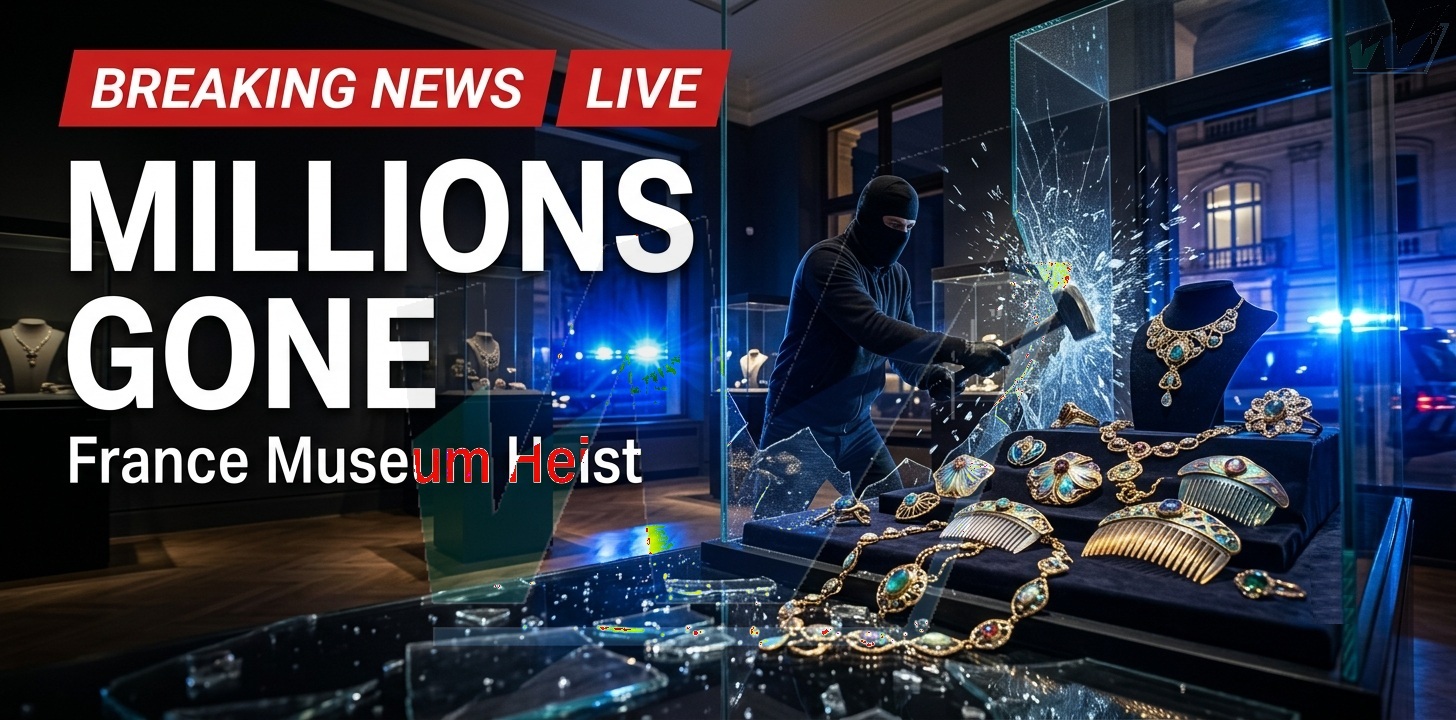
A team of masked burglars stormed the Musée Lalique in the quiet Alsatian village of Wingen-sur-Moder, smashing display cases and disappearing with some of the museum’s most valuable jewelry creation treasures estimated to be worth around €4 million (approximately US$4.7 million). By the time police arrived, the thieves had vanished without leaving a trace.
The spectacular robbery has reignited fears that Europe’s museums are confronting a new generation of highly organized professional criminals capable of defeating even modern security systems.
A Raid That Lasted Barely Eleven Minutes
According to investigators, the burglars struck at approximately 5:30 a.m. Sunday, targeting the museum’s celebrated jewelry gallery.
Surveillance footage reportedly shows a disciplined team forcing entry before heading directly toward specific display cases, suggesting the operation had been carefully planned long before the attack.
The gang smashed six display cabinets and escaped with roughly 20 exceptional jewelry pieces created by the legendary French designer René Lalique, whose Art Nouveau and Art Deco masterpieces transformed decorative arts during the early twentieth century.
Authorities believe the entire operation lasted about eleven minutes.
That was all the time the thieves needed.
The Alarm Worked, But the Response Didn’t
Perhaps the most troubling revelation is that the museum’s alarm system reportedly functioned exactly as intended.
The weakness came afterward.
According to investigators, the private security company responsible for responding spent precious minutes verifying the alarm before dispatching help. During that delay, the burglars completed their mission and fled.
Ironically, a cleaning employee reportedly became the first person to discover the break-in and alerted French gendarmes before security responders reached the scene. Local officials have sharply criticized the delayed response, calling it a serious failure in protecting national cultural heritage.
Why Lalique Matters
The museum is far more than a regional attraction.
Opened in 2011, the Musée Lalique stands beside the historic glassworks established by René Lalique in 1921, preserving the legacy of one of France’s greatest luxury designers.
Its collection contains more than 650 works, ranging from crystal masterpieces to rare jewelry that helped define both the Art Nouveau and Art Deco movements.
Many of the stolen pieces are considered irreplaceable because of their historical craftsmanship and artistic significance rather than simply their market value.
Coming Only Months After the Louvre Shock
The timing has intensified concern across France.
Less than a year ago, criminals stunned the world with an audacious robbery at the Louvre Museum in Paris, stealing historic royal jewels valued at roughly €88 million (US$102 million) in a daylight operation that exposed major weaknesses in one of the world’s most famous museums.
Following that unprecedented theft, French authorities ordered nationwide security reviews and increased protection at museums considered vulnerable. The Lalique Museum was among the institutions receiving heightened attention after being classified as a sensitive cultural site.
Yet even with enhanced precautions, professional thieves managed to strike again.
The latest burglary has prompted fresh questions about whether current museum security strategies are keeping pace with increasingly sophisticated criminal networks.
Investigators Suspect Professional Planning
Officials have not publicly identified suspects, but investigators believe the precision of the operation indicates experienced criminals rather than opportunistic thieves.
The burglars appeared to know:
- Exactly where the most valuable jewelry was displayed.
- How long they had before police could arrived.
- The quickest route into and out of the building.
- Which showcases contained their intended targets.
Local officials have suggested the gang may have possessed unusually detailed knowledge of the museum’s layout and security procedures, though investigators have not confirmed whether insider information played a role.
The Challenge of Recovering Stolen Masterpieces
Unlike gold or gemstones that can be melted down or recut, Lalique’s historic creations are internationally recognizable.
Experts say such objects are extremely difficult to sell legally through reputable auction houses or collectors.
Instead, stolen museum treasures often disappear into underground criminal markets, private illicit collections, or are trafficked internationally using sophisticated smuggling networks.
For investigators, the race is now against time.
The longer the jewels remain missing, the greater the chance they vanish beyond Europe’s borders.
France Under Pressure
The Musée Lalique has closed temporarily while forensic specialists document the damage and assess the full extent of the loss. Investigators are reviewing surveillance footage and collecting forensic evidence as the nationwide hunt for the burglars continues.
For France, the incident represents more than another theft.
It raises uncomfortable questions about whether even the country’s most treasured cultural institutions can protect irreplaceable works from increasingly organized criminal syndicates.
Two spectacular museum heists in less than a year have transformed what once seemed unimaginable into an alarming pattern.
And until the missing jewels are recovered, and those responsible are brought to justice, the shattered display cases at the Lalique Museum will stand as a reminder that some of Europe’s greatest artistic treasures remain vulnerable, no matter how secure they appear.